Quick Tips: How to Price Secondhand Items for a Fast Sale
Trying to sell your secondhand stuff quickly? The trick to a fast sale usually comes down to smart pricing. You want to hit that sweet spot: low enough to attract buyers quickly, but high enough that you feel good about the money you’re getting. It’s a balance, and we’ll walk through how to find it without overthinking it.
Understand Your Goal: Fast Sale vs. Max Profit
Before you even think about a number, get clear on what you’re trying to achieve. Are you decluttering and want items gone ASAP, even if it means slightly less cash? Or are you willing to wait longer for the absolute best price? For a fast sale, your priority shifts from maximizing every single dollar to moving the item quickly and efficiently. This often means being more aggressive with your pricing from the start.
The Decluttering Mindset
If your primary motivation is to clear space, you can afford to be more flexible with your pricing. Think about the “cost” of keeping an item – the space it takes up, the mental clutter, the time spent trying to sell it for top dollar. Sometimes, a slightly lower price that guarantees a quick sale is a better return on your overall time and effort. This doesn’t mean giving things away, but it does mean being realistic and perhaps a little generous to potential buyers.
The Max Profit Approach (and why it’s different for a fast sale)
If your goal was maximum profit, you’d likely start higher, be prepared to negotiate more, and potentially wait weeks or even months for the right buyer. You’d invest more time in research, photography, and detailed descriptions. For a fast sale, this approach is counterproductive. You’re aiming for volume and speed, not necessarily the absolute highest individual return. This distinction is crucial because it influences every subsequent pricing decision.
Research is Your Friend (But Keep It Quick)
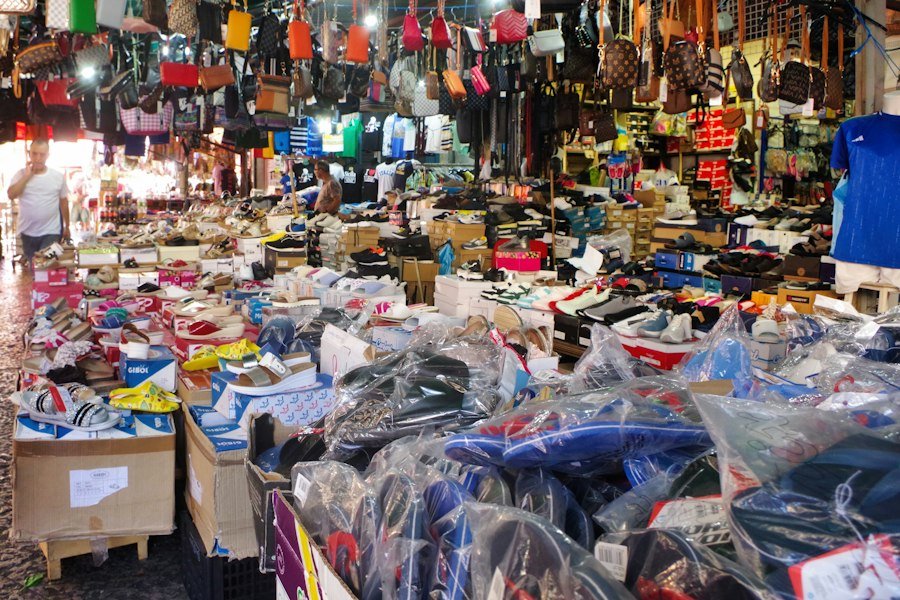
You don’t need to become a market analyst, but a quick scan of similar items is non-negotiable. This isn’t about deep dives; it’s about getting a pulse on what things are actually selling for right now.
Where to Look for Price Comparisons
Stick to the platforms where you plan to sell. If you’re using Facebook Marketplace, check Marketplace. If it’s eBay, check eBay’s sold listings (not just active listings). Poshmark, Depop, Craigslist – whatever your chosen venue, see what’s moving there. This gives you the most relevant data.
Focus on Sold Listings, Not Just Active Ones
This is a critical distinction. Anyone can list an item for any price. What matters is what people are actually paying. On eBay, filter by “Sold Items” or “Completed Items.” On Facebook Marketplace, you might need to use common sense – look for listings that have been up for a while with no engagement versus those that disappear quickly. If you see five identical items listed for $50, but none of them are selling, and one sold for $30, then $30 is closer to its market value for a fast sale.
Identify Key Pricing Factors
As you’re looking, pay attention to things that influence price:
- Condition: New with tags (NWT), excellent used condition (EUC), good, fair. Be honest about yours.
- Brand/Model: Is it a popular brand? A specific model people seek out?
- Completeness: Does it have all accessories, manuals, original packaging?
- Scarcity: Is it something rare or easily found?
Don’t spend hours on this. A quick 10-15 minute search for similar items should give you a good enough baseline.
The “Sweet Spot” Pricing Strategy
Once you have a baseline, it’s time to set your price. For a fast sale, you generally want to price at the lower end of your research findings, or even slightly below.
The 70% Rule (or even 50-60% for quick sales)
A common guideline for used items is to start around 70% of the original retail price for items in excellent condition. However, for a fast sale, you might need to drop that further, especially if it’s not a high-demand item or if there’s a lot of competition. Consider 50-60% of original retail for popular items in good condition, and even less for items with wear or those you just need gone. This isn’t a hard and fast rule, but a mental starting point. If an item originally cost $100, and it’s in good shape, aiming for $50-$60 will get more attention than $70-$80 if your goal is speed.
Underpricing to Sell Fast
Sometimes, pricing slightly below the perceived market value is the quickest way to get an item out the door. This can create a sense of urgency and attract buyers who are looking for a bargain. Think about it: if two identical items are listed, one at $35 and one at $30, the $30 item will almost certainly sell first. The difference might be negligible to your bottom line but significant to a buyer’s decision. This strategy is particularly effective for lower-value items where the time spent negotiating isn’t worth a few extra dollars.
The “Negotiation Room” Consideration (or lack thereof for speed)
While it’s common to build in negotiation room, for a fast sale, you might want to price closer to your absolute bottom line. This reduces back-and-forth, making the transaction quicker. If you price at $25 hoping to get $20, just list it for $20. Buyers appreciate transparency and a fair price upfront. If you’re tired of negotiating, this is your path. If you do want to allow for negotiation, make it clear that the price is “OBO” (or best offer), but be prepared to accept something close to your asking price quickly.
Bundling for Value
If you have multiple related items (e.g., a set of baby clothes in the same size, a collection of books by the same author, camera lenses), consider bundling them. You might sell them faster and for a slightly higher combined price than if you listed each individually. Buyers often perceive bundles as better value, and it saves you time creating multiple listings.
Presentation Matters (Even for a Quick Sale)
Even when you’re aiming for speed, don’t completely neglect presentation. Good photos and a clear description make a huge difference in attracting serious buyers and closing the deal quickly.
Good Photos are Non-Negotiable
This is probably the single most important factor after pricing. Buyers scroll quickly. A blurry, dark photo on a messy background will be skipped over. You don’t need professional equipment, just:
- Good Lighting: Natural light is best. Near a window during the day.
- Clean Background: A plain wall, a clean sheet, or a tidy floor. Remove clutter.
- Multiple Angles: Show the front, back, sides, and any important details.
- Highlight Flaws (Honestly): If there’s a scuff, tear, or stain, take a clear photo of it. This builds trust and prevents wasted time with buyers who arrive and are surprised.
Bad photos lead to questions, distrust, and ultimately, no sale or a slower sale. Good photos attract more eyes and convey professionalism, even for a casual sale.
Clear and Concise Descriptions
Get straight to the point. Include:
- Item Name: Be specific (e.g., “IKEA KALLAX 4×2 Shelf Unit” not just “Shelf”).
- Condition: Use standard terms (EUC, GUC, etc.) and explain any flaws clearly.
- Key Features/Specifications: Size, color, material, brand, model number.
- Reason for Selling (Optional): “Moving,” “No longer needed” can add a human touch.
- Pick-up/Delivery Info: State your preference clearly (e.g., “Pick-up only, [general location]”).
Avoid overly flowery language or long anecdotes. Buyers want facts to make a quick decision. The less guesswork, the better.
Be Honest About Condition
Seriously, just be upfront. If something has a scratch, say so and show it. If it’s missing a piece, disclose it. Misrepresenting an item will lead to frustrated buyers, bad reviews (if applicable), and potentially a return – which completely defeats the purpose of a fast sale. Honesty builds trust, which speeds up the transaction process.
Be Responsive and Flexible
| Factor | Description | Pricing Tip | Example Metric |
|---|---|---|---|
| Item Condition | Assess wear and tear, functionality, and appearance | Price lower if condition is fair or poor | 90% of original price for like-new, 70% for good, 50% for fair |
| Original Price | Base price when item was new | Start pricing at 40-70% of original price | Set price at 60% of original for quick sale |
| Market Demand | Popularity and current demand for the item | Increase price if demand is high, decrease if low | Adjust price by +/- 10-20% based on demand |
| Competition | Prices of similar items listed for sale | Price slightly below competitors for faster sale | Set price 5-10% lower than average competitor price |
| Urgency to Sell | How quickly you want to sell the item | Lower price to encourage quick offers | Reduce price by 15-25% for immediate sale |
| Seasonality | Time of year affecting item demand | Price higher during peak season, lower off-season | Increase price by 10% during peak season |
| Additional Costs | Shipping, fees, or refurbishment costs | Include costs in pricing or disclose separately | Deduct estimated fees from asking price |
Once your item is listed, your responsiveness can make or break a quick sale. Buyers often message multiple sellers, and the first one to respond might get the deal.
Timely Communication
Check your messages frequently. Respond to inquiries as quickly as possible. Even if you don’t have an immediate answer, acknowledge the message and let them know you’ll get back to them. A quick “I’ll measure that for you when I get home tonight!” is better than silence. Delays give buyers time to find another seller.
Prepare for Common Questions
Anticipate questions buyers might have based on your listing. Have measurements ready, know the item’s weight if shipping, and be clear about your availability for pick-up. The faster you can answer, the less friction there is.
Be Open to Reasonable Offers (and know your absolute bottom)
If you’ve priced aggressively for a fast sale, you might not get many offers below your asking price. However, if you do, be prepared to accept a reasonable one, especially if it’s close to what you asked. For example, if you list something for $25 and someone offers $20, and your goal is speed, accepting that $20 might be the best move. Don’t haggle over a few dollars if your priority is getting rid of the item. Know your absolute lowest price before you start negotiating, and don’t go below it.
Flexibility with Pick-up/Meet-up
If possible, offer a few different time slots for pick-up. The easier you make it for the buyer, the more likely the sale will go through quickly. If you’re only available between 2:00 PM and 2:15 PM on Tuesdays, you’re severely limiting your chances. Consider safe, public meeting places if you’re uncomfortable with home pick-ups. Some people even offer to drop off for a small fee, which can be an attractive option for buyers.
Payment Methods
Be clear about your preferred payment method (cash, Venmo, PayPal, etc.). Offering a couple of popular options can also speed things up. Cash is often easiest for local pick-ups.
By following these practical tips, you’ll be well on your way to pricing your secondhand items effectively for a fast sale, getting them out of your home, and putting a bit of extra cash in your pocket. Happy selling!